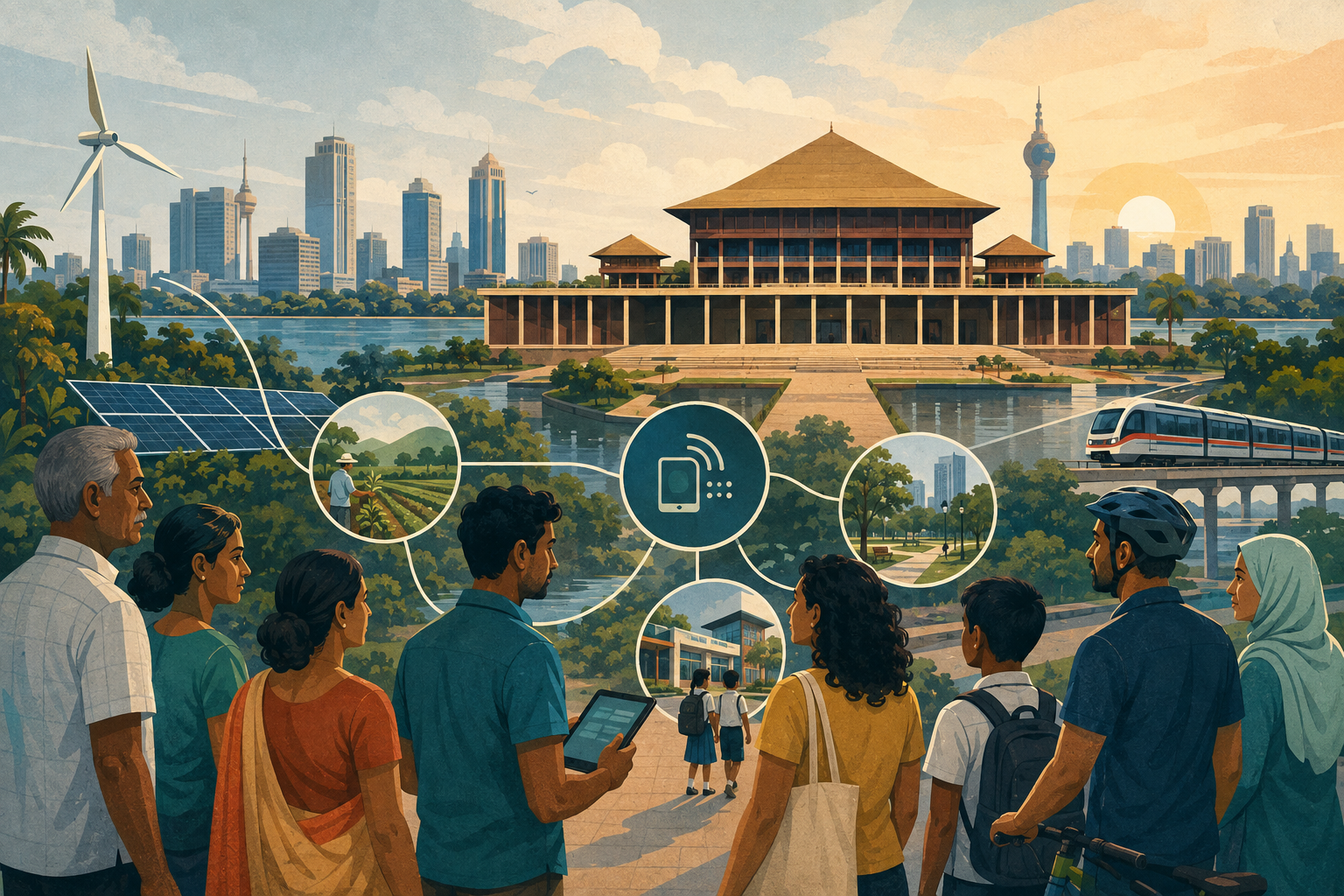
Anura Kumara Dissanayake became Sri Lanka’s president in September 2024, campaigning as the candidate of the National People’s Power coalition. The NPP then won a large parliamentary majority. By September 2026, the fairest question is not whether every promise is complete, but whether institutions, public services and household conditions are moving in the promised direction.
From protest mood to governing mandate
The NPP presented itself as a break from an established political culture blamed by many voters for corruption, weak accountability and the 2022 economic collapse. Its programme promised cleaner government, broader economic participation, stronger social protection and an inclusive national identity.
That mandate created unusually high expectations. A parliamentary majority gives the government room to legislate, but also reduces its ability to blame coalition paralysis. Delivery, transparency and respect for independent institutions therefore matter as much as popularity.
Economic stability is a real gain—but not solely a party achievement
The Central Bank’s 2025 review estimated real GDP growth of 5%, the second consecutive year of expansion. It also reported a third consecutive primary-budget surplus, improved labour-market conditions and stronger external buffers. These are important improvements after the crisis.
Causation needs care. Recovery began before the NPP took office and continues within the IMF-supported programme. In May 2026, the IMF said programme performance was generally strong, while noting that some benchmarks were delayed and risks remained. The government deserves assessment for maintaining stability and implementing reforms—not ownership of every positive number.
For families, the deeper test is whether stable statistics become reliable incomes, affordable essentials, quality services and opportunity outside Colombo.
Anti-corruption has moved from slogan to framework
The National Anti-Corruption Action Plan 2025–2029 sets out reforms around prevention, enforcement, public-sector integrity and citizen participation. Regulations for asset and liability declarations were also issued in 2025.
Frameworks are necessary, but success requires independent investigations, fair prosecutions, transparent procurement and public access to meaningful information. Arrest counts alone do not prove systemic change. The real achievement would be institutions strong enough to act consistently regardless of party or office.
Digital government is one of the clearest 2026 priorities
The President’s Office lists government digitalisation, QR transactions, cloud infrastructure, broadband, single-window services, a digital identity project and electronic traffic-fine payments among the 2026 agenda.
One visible step arrived in April: the National QR Payment Adoption Programme removed merchant service charges for LankaQR payments up to Rs. 5,000. That can help small merchants accept digital payments, though adoption, reliability, cybersecurity and access for people without modern devices remain important tests.
“Clean Sri Lanka” reaches beyond litter
The government presents Clean Sri Lanka as a broad programme covering environmental responsibility, public behaviour and institutional improvement. Announced work has included reservoir conservation and material-recovery facilities for plastic and polythene waste.
The programme’s value will depend on published budgets, local delivery and measurable outcomes. Clean streets matter, but lasting improvement also requires waste collection, recycling markets, enforcement and accountable local government.
National unity and social protection remain central tests
Dissanayake has repeatedly described a country where citizens can live with dignity regardless of language or religion. The credibility of that commitment depends on equal treatment, minority confidence, reconciliation and whether state institutions serve every region fairly.
The government also faces the difficult balance of fiscal discipline and protection for vulnerable households. The IMF programme explicitly combines debt and fiscal sustainability with protecting vulnerable people. Budget allocations matter, but coverage, targeting and the lived experience of recipients matter more.
A fair scorecard as of September 2026
Demonstrable progress: macroeconomic recovery continued; the IMF programme remained broadly on track; a national anti-corruption plan and asset-declaration regulations exist; and practical digital-payment measures launched.
Active but not yet proven: wider government digitalisation, Clean Sri Lanka, education reform, rural-poverty reduction and a stronger production economy require multi-year evidence.
The enduring risks: household pressure, debt constraints, external shocks, implementation gaps and the possibility that institutional reform becomes dependent on personalities rather than durable rules.
Direction is visible.
Durable results take longer.
The NPP government has preserved economic stabilisation and begun visible work on integrity and digitalisation. That is meaningful, but it is not the same as completing the transformation promised in 2024. The decisive measure will be whether reforms survive scrutiny, improve daily life and strengthen institutions beyond one presidency.
Central Bank: Annual Economic Review 2025 ↗
IMF: Fifth and Sixth Reviews ↗
National Anti-Corruption Action Plan ↗
President’s Office: 2026 digital agenda ↗