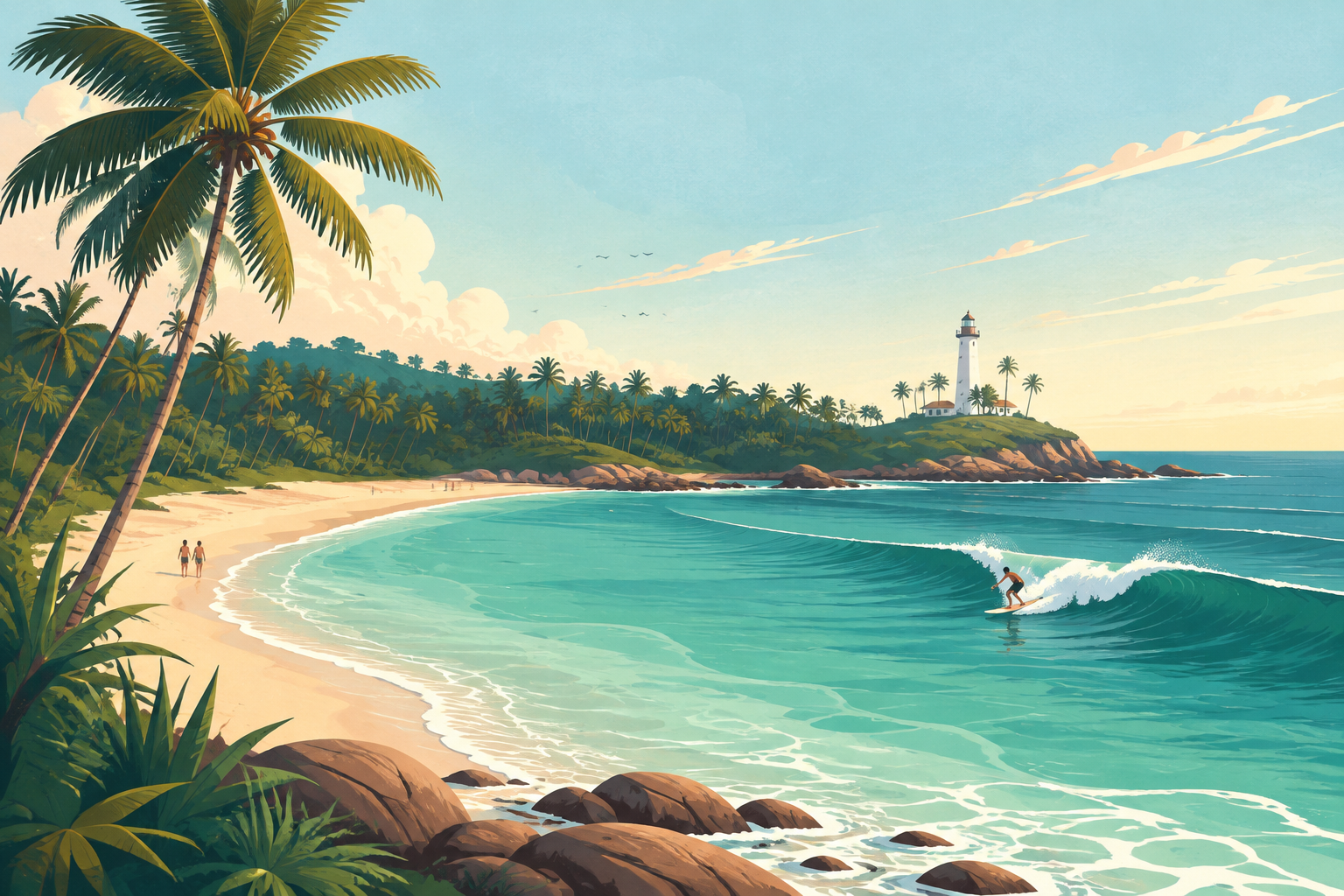
Sri Lanka has roughly 1,300 kilometres of coastline, but no single beach suits every traveller. Some bays are sheltered and social; others are shaped by open-ocean swell. The best choice depends on the month, your confidence in the water and how busy you want the days to feel.
First, choose the right side of the island
The south and west generally fit European winter journeys, with December to April often offering their most settled beach period. The east coast usually becomes more appealing from roughly late March into October.
These are useful patterns, not promises. Tropical weather and sea conditions change, so check a local forecast and ask experienced people before entering the water.
South-coast favourites: character over rankings
Unawatuna offers a sociable, sheltered-feeling bay close to Galle. Weligama is practical for beginner surf lessons. Mirissa combines a photogenic crescent with restaurants and nightlife, while nearby coves can feel calmer.
Hiriketiya is compact, fashionable and easy to love, but can become crowded. Around Tangalle, longer stretches of sand feel quieter and more spacious—although some have powerful shore breaks unsuitable for casual swimming.
East-coast escapes for warmer-month journeys
Nilaveli and Uppuveli, near Trincomalee, pair broad beaches with access to marine activities. Pasikuda is known for an unusually long shallow shoreline, while Arugam Bay brings a lively surf culture to the southeast.
The east often has a quieter rural rhythm beyond its best-known hubs. It rewards travellers with more time, especially when paired with Batticaloa, Gal Oya or the Cultural Triangle.
Where should you go surfing?
Weligama’s broad sandy bay is a common starting point for beginners on the south coast. More experienced surfers explore breaks around Midigama, Ahangama and Hiriketiya when conditions suit them. Arugam Bay is the east coast’s celebrated surf centre.
Choose a reputable instructor, use equipment suitable for your ability and respect the lineup. A famous break is not automatically beginner-friendly, and conditions can change from one hour to the next.
Swimming safely matters more than a beautiful photo
Sri Lanka’s ocean can have strong currents, steep shore breaks and shifting sand. Swim where local advice supports it, follow warning flags, keep children close and avoid entering rough water alone. Do not assume a calm-looking surface is risk-free.
Reef shoes are not a substitute for care, and swimming after alcohol is never worth the risk. If the sea is unsettled, enjoy the shore, a hotel pool or a different bay.
Find the beach that lets you slow down
The most rewarding coast days are not always the most famous. Stay two or three nights, walk early before the heat, eat in locally run restaurants and leave space for reading, swimming and conversation.
Reduce single-use plastic, keep distance from nesting turtles, never touch coral and choose wildlife operators that explain their practices. A clean beach depends on visitors as well as local communities.
Build one coastline into a wider journey
For a first trip between December and April, move from the Cultural Triangle through the highlands, then finish with three or four nights between Tangalle, Mirissa and Galle. In the European summer, consider Trincomalee or Pasikuda after the ancient cities, or Arugam Bay after wildlife country.
Avoid collecting beaches like landmarks. One well-chosen base, with day trips to neighbouring coves, usually creates a better ending than changing hotels every night.
Match the coast
to your rhythm.
For surf, start with Weligama or explore Arugam Bay in season. For easy access and atmosphere, look around Galle and Unawatuna. For spacious quiet, consider Tangalle or the east. Then check the sea each day and let local conditions make the final decision.