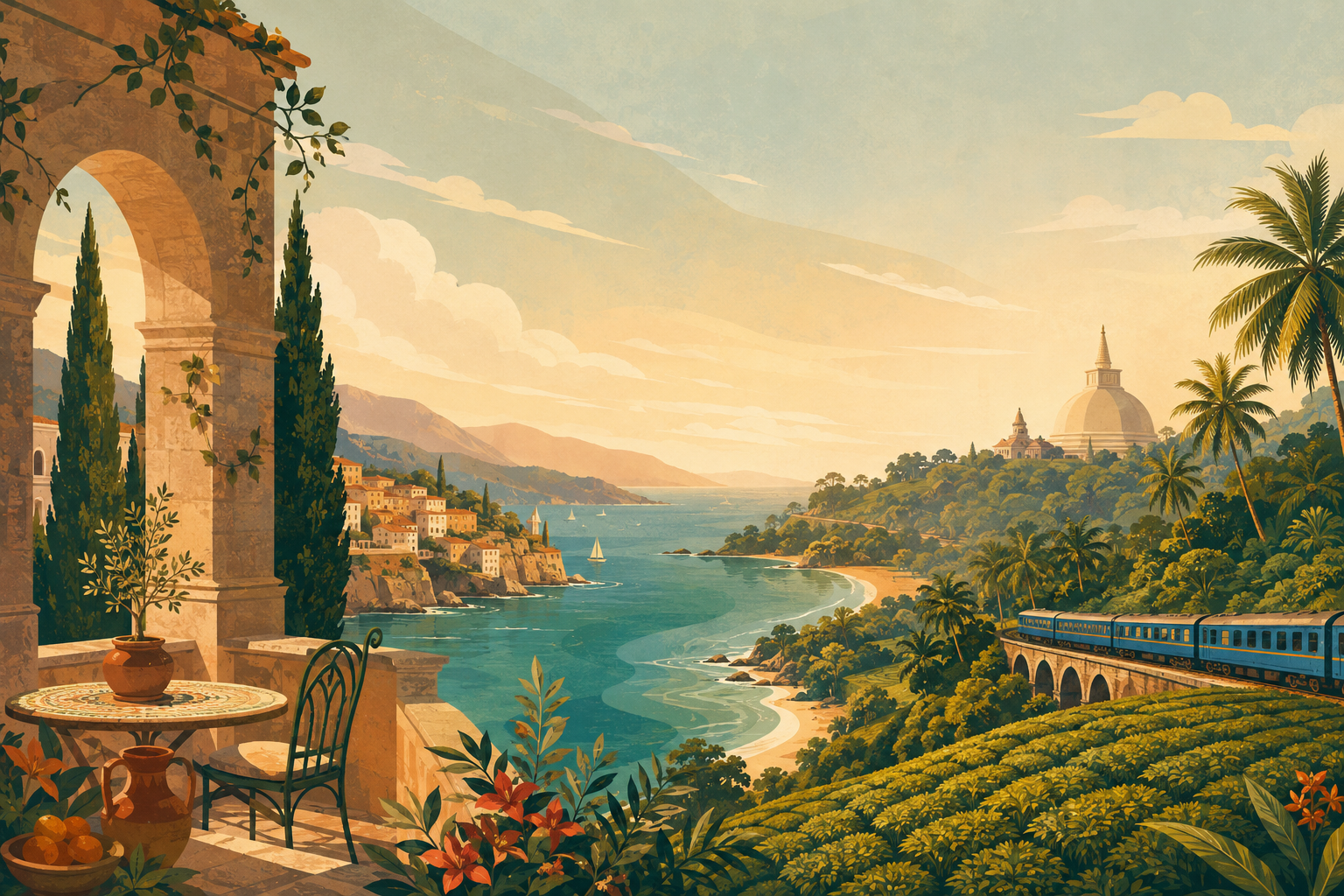
For travellers leaving Rome, Milan, Venice, Bologna, Naples or elsewhere in Italy, Sri Lanka offers a rewarding contrast: an island of sacred cities, warm hospitality, green highlands, wildlife and Indian Ocean shores.
Find sunshine beyond the Italian winter
When Italy enters its cooler months, Sri Lanka can offer warm evenings and ocean days. The south and west are commonly considered between December and April, while the east has a different seasonal rhythm. Tropical weather can still change quickly, so build some flexibility into the route.
The transformation is immediate: palms instead of bare winter streets, fresh fruit at breakfast and sunset beside the Indian Ocean.
Explore centuries of living history
Italian travellers surrounded by Roman, medieval and Renaissance heritage will recognise the pleasure of a place where history is part of everyday life. Anuradhapura’s stupas, Sigiriya’s rock fortress, Dambulla’s cave temples and Galle Fort reveal very different chapters of the island.
Many are living sacred places rather than museums. Dress respectfully, remove shoes when asked and allow time to understand what you are seeing.
 Sigiriya is a powerful introduction to Sri Lanka’s Cultural Triangle.
Discover a new language of food
Italy and Sri Lanka express hospitality through the table. The ingredients differ, but the pleasure of seasonal produce, regional cooking and meals shared slowly feels familiar. Try hoppers, rice and curry, kottu, seafood, sambols and Tamil specialities.
Ask what was cooked that day and order several dishes to share. Sri Lankan food is more varied than a single curry, and the best meals often arrive without ceremony.
Travel from tea hills to a tropical coast
Sri Lanka fits remarkable variety into a compact island. The train through Kandy, Nuwara Eliya, Haputale and Ella moves between mist, waterfalls, forest and tea estates before the landscape opens toward dry country and the coast.
Do not mistake short distances for short travel times. Slower roads and railways are part of the experience, and fewer overnight stops usually make a better holiday.
Meet Sri Lanka’s wild side responsibly
Elephants, leopards, monkeys, marine life and hundreds of bird species make nature a central part of the journey. Choose guides who respect distance, avoid crowding animals and never promise a sighting.
A safari should complement the landscape, not turn wildlife into a checklist. One thoughtfully selected park is often more rewarding than several rushed visits.
Enjoy a slower, more human journey
Italy and Sri Lanka both reward travellers who pause: morning coffee becomes morning tea, the piazza becomes a market or railway platform, and conversation often matters as much as the destination.
Small guesthouses, family-run restaurants and local guides create the most memorable connections. Approach them with curiosity rather than expecting Europe to be recreated in the tropics.
Follow an easy two-week first route
Begin gently near Negombo, continue to Sigiriya and the Cultural Triangle, move through Kandy into the highlands, add one responsible wildlife stop and finish around Galle or the southern coast.
This creates a satisfying progression—history first, mountains in the middle and the sea at the end—without trying to cover the whole island.
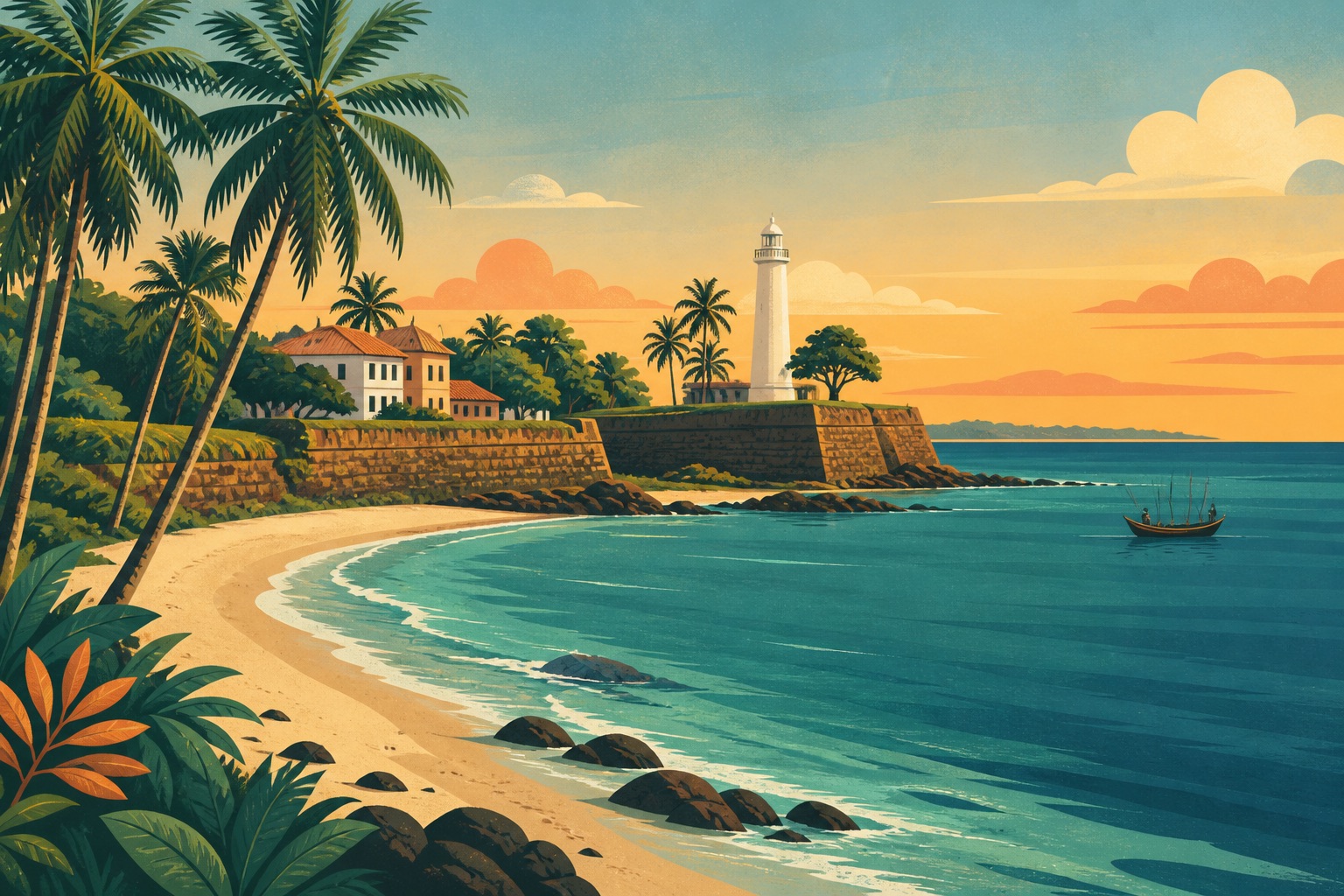 Galle and the southern coast offer an atmospheric ending to a first journey.
Plan well before leaving Italy
Check passport, entry authorisation, insurance and health guidance with official sources shortly before booking and again before departure. Requirements can change, so avoid relying only on an old article or social post.
Allow 12–16 days if possible, pack light clothing plus respectful temple wear and a rain layer, and reserve space in the itinerary for delays and spontaneous discoveries.
Sri Lanka feels different,
but never distant.
For Italian travellers, the island combines familiar pleasures—food, family, heritage, landscape and the sea—with a completely new cultural perspective. Travel slowly and it becomes far more than a winter escape.
Ask about a personal journey