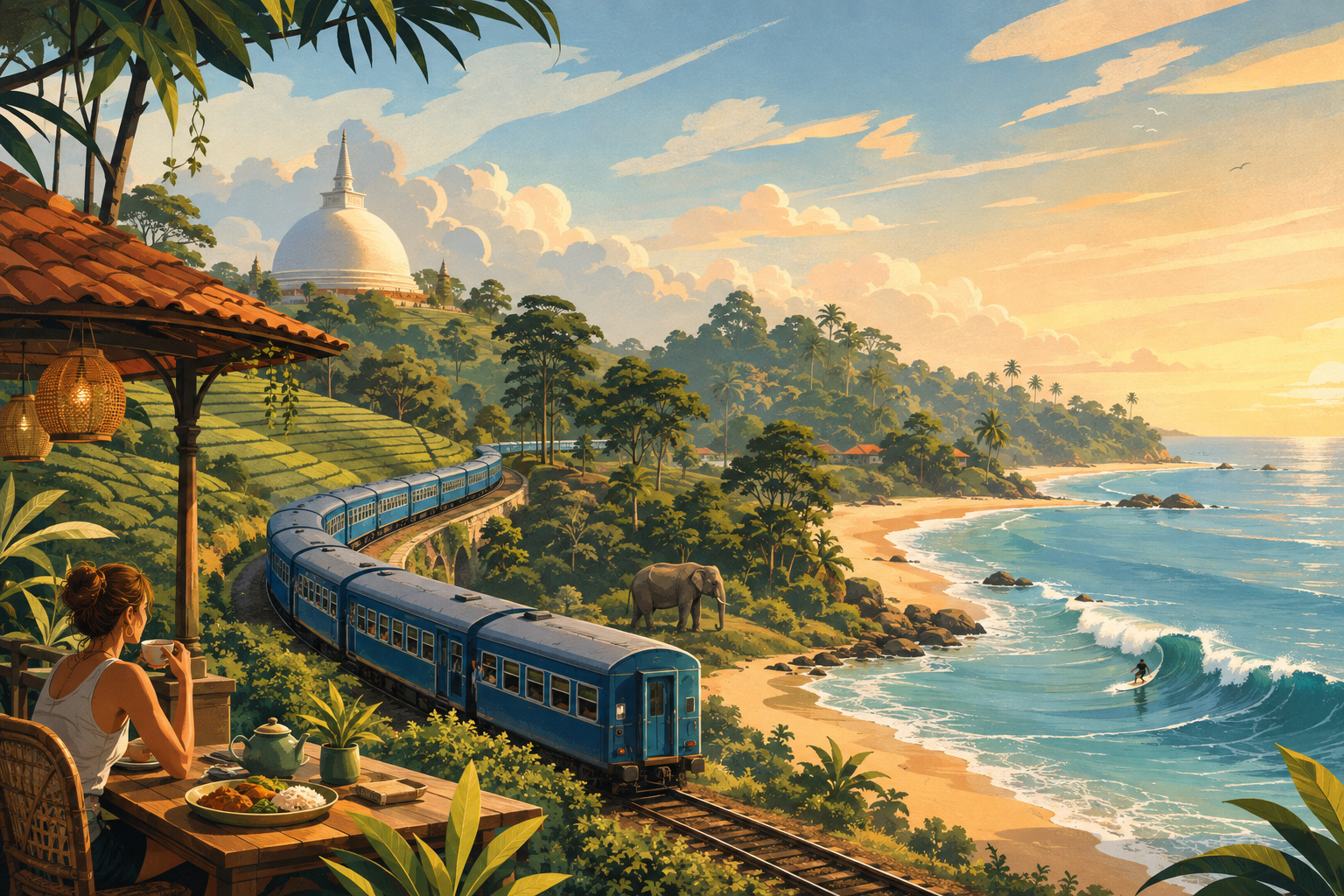
Sri Lanka is having a visible travel moment in 2026. The country’s tourism authority reports continued international recognition, and official March data recorded Europe as the island’s second-largest regional source market, contributing 42.5% of arrivals that month. Beyond the numbers, Sri Lanka fits what many travellers want now: variety without endless flights, memorable food and time outdoors.
The attention is real—but travel should go deeper
Sri Lanka Tourism highlighted new international recognition for the destination in July 2026, pointing to affordability and the unusual combination of heritage cities, tropical coast and hill country in one place. Official planning scenarios have projected roughly 2.55 to 3 million arrivals for 2026, depending on demand and airline capacity.
Popularity brings responsibility. A trending destination is not a backdrop to consume quickly; it is a lived place. Travel is better when local businesses, communities and landscapes receive as much attention as the headline attractions.
A small island can hold a very big journey
In one well-paced trip you can move from Anuradhapura’s ancient monuments to misty tea country, wildlife-rich plains and a warm ocean. The distances look short on a map, yet the landscapes and cultural rhythms feel distinct.
That compact variety suits travellers who want more depth from one long-haul flight. The trick is not to see everything: choose three or four regions and give each enough time.
Slower travel feels natural here
Scenic trains, small guesthouses and long coast days encourage a gentler pace. A slower itinerary also reduces exhausting hotel changes and creates more opportunities to eat locally, meet people and understand where you are.
The food is becoming part of the reason to fly
Hoppers at breakfast, rice and curry with many small dishes, kottu cooked on a hot griddle, seafood by the coast and fragrant tea in the highlands make eating part of the route—not an interruption to sightseeing.
Ask what is cooked today, try regional dishes and choose busy local restaurants with good turnover. Sri Lankan food can be spicy, but “less chilli” does not mean less flavour.
Wildlife and soft adventure share the same map
National parks, whale-rich waters, rainforest, hiking country and surf breaks create options for very different travellers. The strongest experiences keep respectful distance from animals and prioritise trained, responsible operators.
Avoid elephant rides, touching wildlife and vehicles that crowd animals for a photograph. Adventure should leave the place as calm as you found it.
Why the island connects with Europeans
Sri Lanka offers winter warmth, English is widely used in visitor settings, and a two-week holiday can combine culture, nature and rest without another international flight. March 2026 data from the tourism authority showed sustained European demand even amid disrupted air connections.
The strongest reason is contrast: a traveller can leave a cold European city and, after one long journey, wake to tropical birds, fresh fruit and a completely different pace.
How to visit while the island is in demand
Book key trains, small hotels and trusted guides early during popular periods, but keep some days unplanned. Travel outside the busiest holiday weeks when possible and include lesser-visited places rather than competing for the same viewpoint.
Verify entry rules, transport conditions and weather with official sources close to departure. Trends change quickly; good preparation and respectful choices remain useful in every year.
Follow the interest.
Travel beyond the trend.
Sri Lanka deserves its moment because it offers genuine range in a remarkably compact place. Come for the landscapes, but make room for conversation, food, quiet mornings and the communities that turn a destination into a journey.